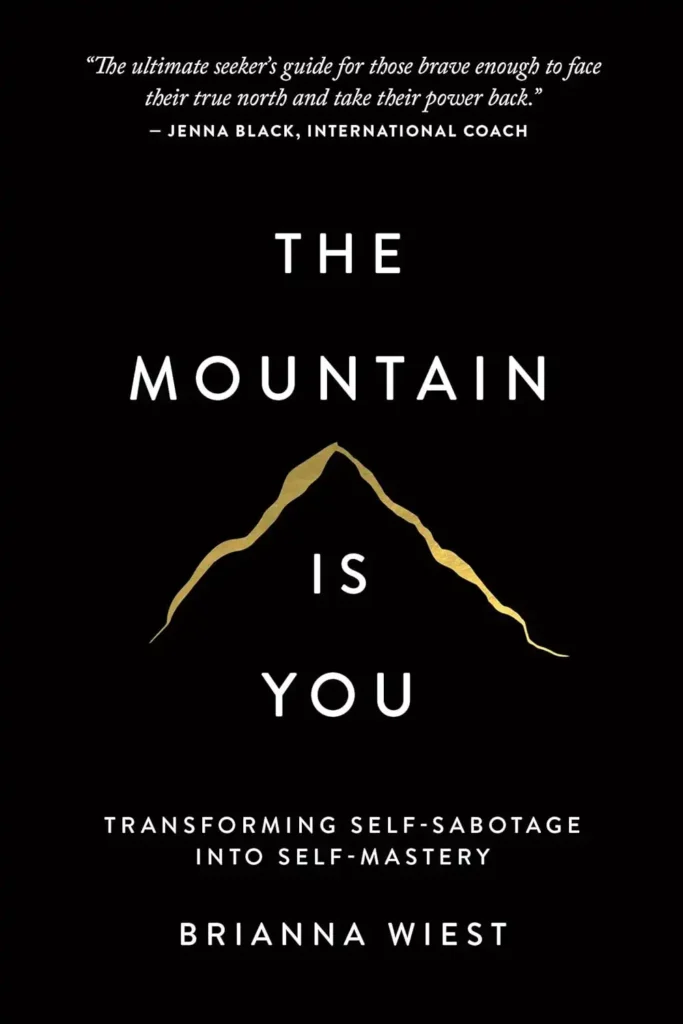
Discover 12 subtle self-sabotage signs from Brianna Wiest’s ‘The Mountain Is You’: Worry identity, approval addiction, blind ambition, comparison traps, and more. Uncover root causes, actionable steps to break patterns, process emotions, and achieve authentic growth beyond upper limits.
Self-sabotage rarely announces itself. You don’t wake up one morning deciding to ruin your own life. Instead, it shows up in patterns so subtle and familiar that you mistake them for personality traits or bad luck. You’re not failing because you lack capability—you’re being held back by unconscious behaviors designed to keep you exactly where you are.
In “The Mountain Is You,” Brianna Wiest dissects the often-invisible ways people undermine their own success and happiness. Her approach goes beyond obvious self-destructive behavior to illuminate the quiet, socially acceptable forms of self-sabotage that keep you stuck while you’re convinced you’re doing everything right.
When Your Worries Become Your Identity
One of the most socially acceptable forms of self-sabotage is chronic worrying disguised as conscientiousness. You tell yourself you’re just being responsible, thinking ahead, preparing for potential problems. But there’s a difference between productive planning and anxiety that masquerades as preparation.
Wiest identifies this pattern: “You are more aware of what you don’t want than what you do. You spend more of your time worrying, ruminating, and focusing on what you hope doesn’t happen than you do imagining, strategizing, and planning for what you do.” This constant focus on worst-case scenarios doesn’t protect you—it paralyzes you.
The person who spends hours each day imagining everything that could go wrong isn’t being prudent. They’re using worry as a way to avoid actually taking action. Because if you’re stuck in analysis paralysis, you never have to face the vulnerability of trying and potentially failing. The worry becomes a full-time job that conveniently prevents you from doing the actual work that would move your life forward.
The Approval Addiction
Another subtle sign of self-sabotage is measuring your worth by others’ reactions rather than your own values. Wiest describes this as spending “more time trying to impress people who don’t like you than you spend with people who love you for who you are.”
This pattern shows up everywhere. You’re at a party but mentally cataloging whether certain people seem impressed by your stories. You choose career paths based on what will sound impressive rather than what genuinely interests you. You stay in relationships not because they fulfill you, but because leaving would mean admitting you made a mistake.
When being liked becomes more important than being yourself, you’ve entered self-sabotage territory. You’re rejecting opportunities that would make you happy in favor of ones that you think will earn approval. You’re performing a version of yourself that isn’t real, which inevitably leads to emptiness—even when the performance successfully earns the validation you sought.
The Information Void
Wiest identifies something many people don’t recognize as self-sabotage: deliberately staying uninformed about crucial aspects of your life. “You don’t know basic facts about your life, like how much debt you have or what other people in your field are being paid for similar work.”
This willful ignorance creates a comfortable fog that prevents you from having to make difficult decisions. If you don’t know how much debt you actually have, you don’t have to create a plan to pay it off. If you don’t know what your work is worth, you don’t have to ask for a raise and risk rejection. If you don’t track your spending, you don’t have to acknowledge your financial habits need to change.
The person who “doesn’t know” their credit score, can’t remember what they weigh, or hasn’t looked at their bank balance in weeks isn’t simply forgetful. They’re protecting themselves from information that would require action. Staying in the dark feels safer than facing reality, but it keeps you powerless to change anything.
Performing Happiness Instead of Feeling It
In the age of social media, a particularly insidious form of self-sabotage involves caring more about appearing happy than actually being happy. Wiest captures this: “You care more about convincing other people you’re okay than actually being okay. You’d rather post photos that make it look like you had a great time than being concerned about whether you actually had a good time.”
This pattern reveals itself in countless small moments. You choose restaurants based on their Instagram-worthiness rather than their food quality. You stay in relationships that look good from the outside while feeling miserable privately. You pursue goals because they’ll make impressive announcements, not because they align with what you actually want.
The energy you spend curating an acceptable external image is energy diverted from building an authentic internal life. And the gap between your performed self and your real self creates a constant, low-level anxiety that something might slip, revealing the truth beneath the performance.
The Trigger Spiral
Wiest identifies emotional hypersensitivity as a sign of self-sabotage: “You’re more afraid of your feelings than anything else. If you get to the point in life at which the scariest, most detrimental thing you face is the fear of whether or not you will be able to handle your own emotions, you are the one standing in your own way—nothing else is.”
This shows up as being easily triggered, overreacting to minor inconveniences, or experiencing emotional swings that feel disproportionate to what happened. Someone makes a neutral comment, and you spend the next three hours dissecting what they really meant. A small setback spirals into questioning your entire life direction.
The problem isn’t that you feel things intensely—it’s that you haven’t developed the skills to process emotions effectively. So instead of allowing feelings to surface, inform you, and pass, you either suppress them entirely (until they explode) or become consumed by them (mistaking their intensity for truth).
The Blind Ambition Trap
Not all self-sabotage looks like underachievement. Sometimes it shows up as relentless pursuit of goals you never questioned. Wiest warns: “You’re blindly chasing goals without asking yourself why you want those things. If you are doing ‘everything you are supposed to be doing’ and yet you feel empty and depressed at the end of the day, the issue is probably that you’re not really doing what you want to be doing; you’ve just adopted someone else’s script for happiness.”
The person working 80-hour weeks toward a promotion they don’t actually want is self-sabotaging just as much as the person who can’t get motivated to work at all. The difference is that their self-sabotage looks successful from the outside, which makes it even harder to recognize and address.
You’re climbing the mountain, making progress, checking boxes—and feeling increasingly hollow because it’s the wrong mountain. You adopted someone else’s definition of success and are efficiently pursuing something that will never fulfill you.
Treating Symptoms Instead of Causes
One of Wiest’s most powerful insights involves recognizing when you’re fighting the wrong battle: “You’re treating your coping mechanisms as the problem. Instead of trying to incite war on yourself to overcome your overeating, spending, drinking, sexing—whatever it is you know you need to improve—ask yourself what emotional need that thing is filling.”
The person who white-knuckles through another diet without addressing why they emotionally eat will inevitably return to old patterns. The person who forces themselves to stop spending without understanding what emotional need the shopping fulfills will just find a different outlet for that need.
You’re self-sabotaging when you focus all your energy on the symptom while ignoring the cause. It creates the illusion of progress—look how hard I’m trying!—while ensuring nothing fundamentally changes.
The Doubt-Over-Potential Mindset
Wiest identifies a cognitive pattern common to self-sabotage: “You value your doubt more than your potential. Negativity bias makes us believe that ‘bad’ things are more real than good, and unless we keep that inclination in check, it can leave us believing that everything we fear to be true is more real than the good things that are actually true.”
This shows up as giving more weight to one criticism than to ten compliments. It’s believing your fear about what might go wrong more than evidence of what’s going right. It’s trusting the voice that says “you can’t” more than the voice that says “you could.”
The self-sabotaging mind treats doubt as wisdom and optimism as naivety. But this isn’t accurate—it’s just your brain’s negativity bias convincing you that the worst-case scenario is the most likely scenario simply because it triggers the strongest emotional response.
The Waiting Game
Perhaps the most common and least recognized form of self-sabotage is waiting for external permission to live your life. Wiest describes it: “You are waiting for someone else to open a door, offer approval, or hand you the life you have been waiting for.”
This person waits for their partner to decide what to do on weekends rather than suggesting activities. They wait for their boss to notice their contributions rather than asking for recognition. They wait for perfect circumstances before starting the business, writing the book, or making the change they claim to want.
The waiting feels safer than acting, because as long as you’re waiting, you can’t fail. You can maintain the fantasy of what could be without risking the reality of what is. But years pass, opportunities dissolve, and nothing changes—not because you weren’t capable, but because you never gave yourself permission to begin.
The Comparison Trap
Wiest points out another pattern: “You don’t realize how far you’ve come. You are not the person you were five years ago. You evolve as your self-image does, so make sure that it’s an accurate one.”
Self-sabotage often involves measuring yourself against impossible standards while dismissing your actual progress. You compare your beginning to someone else’s middle. You focus on how far you have to go while ignoring how far you’ve come. You judge your messy reality against others’ curated highlights.
This constant unfavorable comparison ensures you always feel inadequate, which conveniently justifies not trying harder. After all, why bother when you’ll never measure up anyway?
The Energy Misallocation
Finally, Wiest identifies a pattern many miss: “You are trying to care about everything. Your willpower is a limited resource. You only have so much in a day. Rather than using it to try to become good at everything, decide what matters most to you. Focus your attention on that, and let everything else slip away.”
Self-sabotage often looks like spreading yourself so thin that nothing gets your best effort. You’re on every committee, starting multiple projects, trying to be everything to everyone. It looks productive, but it guarantees mediocrity across the board rather than excellence anywhere.
The person genuinely committed to their goals focuses their energy ruthlessly. The self-sabotaging person fragments their energy so completely that they never have to find out if they could actually succeed at something—because they never give anything their full effort.
Moving From Recognition to Change
Recognizing these patterns is essential, but recognition alone changes nothing. Wiest is clear: “The only thing that’s going to change your life is when you actually start doing something different.”
The patterns of self-sabotage feel so natural, so much like “just who you are,” that changing them requires deliberate, consistent effort. You have to catch yourself mid-worry spiral and redirect. You have to notice when you’re performing instead of living and make a different choice. You have to recognize when you’re avoiding important information and look anyway, despite the discomfort.
Self-sabotage persists because it serves a function—usually keeping you safe from vulnerability, failure, or change. To stop sabotaging yourself, you have to become willing to feel unsafe, to risk failure, to tolerate change. You have to want growth more than you want comfort.
The patterns Wiest identifies aren’t character flaws. They’re coping mechanisms that once served you but now hold you back. Recognizing them is the first step. Understanding why they exist is the second. And developing healthier ways to meet the same needs—that’s where the real work begins.