

You’ve made promises to yourself and broken them. You’ve set goals and abandoned them. You’ve known what you should do and done the opposite so many times that now, when you commit to something, a voice in your head laughs. “Sure you will. Just like all the other times.”
This erosion of self-trust is one of the most painful consequences of self-sabotage. It’s not just that you’re not where you want to be—it’s that you no longer believe you’re capable of getting there because you can’t trust yourself to follow through.
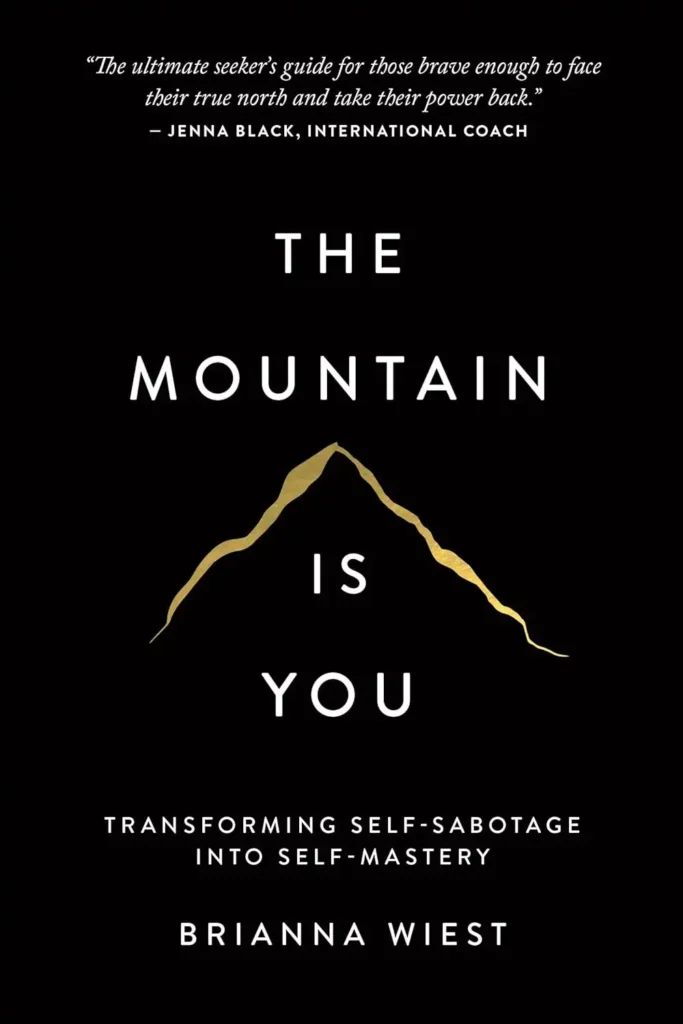
In “The Mountain Is You,” Brianna Wiest addresses this crisis of self-trust with unusual directness. Rebuilding it isn’t about positive affirmations or motivational speeches. It’s about understanding why you broke trust with yourself in the first place and then systematically rebuilding it through action.
Understanding Why You Let Yourself Down
Before you can rebuild self-trust, you need to understand why it eroded. Wiest’s insight is crucial: “Self-sabotage is not a way we hurt ourselves; it’s a way we try to protect ourselves.”
You didn’t break promises to yourself because you’re weak or undisciplined. You did it because those commitments were misaligned with your actual needs, or they required you to face something you weren’t ready to handle, or they were never truly your commitments in the first place.
The person who keeps promising to go to the gym and doesn’t might be exhausted from overwork, making exercise feel like another obligation rather than self-care. The person who sets aggressive business goals and abandons them might be terrified of the visibility that success would bring. The person who commits to ending a toxic relationship but doesn’t might be more afraid of loneliness than toxicity.
“When you have big, ongoing, insurmountable issues in your life—especially when the solutions seem so simple, so easy, and yet so impossible to stick with—what you have are not big problems but big attachments,” Wiest explains. Your inability to follow through isn’t random. You’re attached to the behavior that’s undermining you because it’s serving a function you haven’t identified.
Understanding this shifts self-trust from a moral issue to a psychological one. You don’t need more willpower; you need more self-understanding.
The Damage of Disconnection From Self
When you repeatedly break promises to yourself, you learn not to listen to yourself. Wiest describes this disconnection: “When we cannot validate our own feelings, we go on a never-ending quest to try to force others to do it for us, but it never works. We never really get what we need.”
This creates a vicious cycle. You stop trusting your own judgment, so you seek external validation for every decision. But external validation is unstable and conditional, which increases your anxiety and makes you even less likely to trust yourself.
The person who can’t trust themselves to know what they want asks everyone else for opinions on every choice. The person who can’t trust themselves to follow through outsources their motivation to others, needing constant encouragement and accountability. They’ve become strangers to themselves, unsure of their own capabilities or desires.
This disconnection extends to your relationship with your body and instincts. Wiest notes that chronic anxiety often stems from “being more afraid of your feelings than anything else.” When you can’t trust yourself to handle your own emotions, you develop elaborate avoidance strategies that further erode self-trust.
The Distinction Between Inner Knowing and Fear
One reason self-trust erodes is confusion between genuine inner knowing and fear-based thinking. Wiest helps clarify the difference:
“Intuitive thoughts are calm. Intruding thoughts are hectic and fear-inducing. Intuitive thoughts are rational; they make a degree of sense. Intruding thoughts are irrational and often stem from aggrandizing a situation or jumping to the worst conclusion possible.”
When you can’t distinguish between these two, you might follow fear-based impulses thinking they’re intuition, or you might ignore genuine intuitive nudges because you’ve been burned by fear before.
The person who constantly second-guesses themselves isn’t experiencing clear intuition—they’re experiencing anxiety masquerading as insight. But they’ve lost the ability to tell the difference, so every decision becomes paralyzing.
Learning to distinguish between the quiet certainty of intuition and the loud chaos of fear is essential to rebuilding self-trust. Wiest provides more markers: “Intuitive thoughts help you in the present. They give you information that you need to make a better-informed decision. Intruding thoughts are often random and have nothing to do with what’s going on in the moment.”
The Role of Small, Kept Promises
Rebuilding self-trust doesn’t happen through grand gestures or dramatic transformations. It happens through small, consistently kept promises. Wiest emphasizes: “If you want to change your life, you need to make tiny, nearly undetectable decisions every hour of every day until those choices are habituated.”
This is crucial because your brain needs evidence that you can trust yourself again. One big promise made and broken reinforces the pattern of unreliability. Ten small promises made and kept begins to rebuild the neural pathway of self-trust.
Start absurdly small. Don’t promise yourself you’ll go to the gym every day. Promise yourself you’ll do one push-up. Don’t commit to writing a book. Commit to writing one sentence. Don’t vow to transform your diet. Commit to drinking a glass of water when you wake up.
“If you want to exercise more, do it now for just 10 minutes. If you want to read, read one page. If you want to meditate, do so for 30 seconds,” Wiest suggests. These micro-commitments are easy to keep, and keeping them rewires your self-concept from “person who breaks promises to self” to “person who follows through.”
Confronting the Emotional Backlog
Self-trust is difficult to rebuild when you’re carrying significant unprocessed emotion. Wiest describes this as your emotional backlog—the accumulated feelings you’ve been avoiding that create constant background noise interfering with clarity.
“When you stop engaging in self-sabotaging behavior, repressed emotions that you weren’t even aware of will start to come up, and you might feel even worse than you did before,” she warns. This is actually progress, but it doesn’t feel like it.
The person trying to rebuild self-trust will face the emotions they’ve been using self-sabotage to avoid. The chronic procrastinator who finally starts working will confront their fear of judgment. The overspender who starts saving will feel the discomfort of not using shopping to self-soothe. The people-pleaser who starts setting boundaries will experience guilt and fear of rejection.
Processing this emotional backlog is essential. “Emotions are physical experiences. We flush our bodies of everything, and regularly so,” Wiest notes. You can’t rebuild self-trust while suppressing the emotions that trigger your self-sabotaging behaviors.
This means creating space to feel what you’ve been avoiding. Journaling, crying, moving your body, talking with a therapist—whatever allows the emotions to move through rather than staying stuck.
Aligning Actions With Actual Values
A major reason people break trust with themselves is pursuing goals that don’t align with their actual values. Wiest identifies this pattern: “If you are doing ‘everything you are supposed to be doing’ and yet you feel empty and depressed at the end of the day, the issue is probably that you’re not really doing what you want to be doing; you’ve just adopted someone else’s script for happiness.”
You can’t trust yourself to follow through on commitments that aren’t genuinely yours. The person who keeps failing to stick with the prestigious career path they don’t actually want isn’t lacking discipline—they’re experiencing the natural resistance that arises when actions and values diverge.
Rebuilding self-trust requires getting honest about what you actually value, not what you think you should value. Maybe you’ve been trying to force yourself to care about financial success when what you actually value is creativity and free time. Maybe you’ve been pushing yourself toward traditional markers of achievement when what you actually want is deep relationships and personal peace.
When your actions align with your genuine values, following through becomes natural. You’re not constantly fighting yourself. This alignment is the foundation of sustainable self-trust.
The Practice of Self-Validation
Wiest emphasizes that rebuilding self-trust requires learning to validate your own feelings and experiences rather than constantly seeking external confirmation.
“Validating someone’s feelings doesn’t mean you agree with them. It doesn’t mean you concede that they are correct,” she explains. It means acknowledging that the feelings make sense given your thoughts and circumstances, and that having feelings doesn’t make you weak or wrong.
The person who needs constant external validation for their emotions has outsourced their internal authority. They can’t trust themselves because they don’t believe their own experience is valid unless someone else confirms it.
Self-validation sounds simple but requires practice: “It makes sense that I feel this way. Anyone in my situation might feel similarly. What I’m feeling is okay.” This internal acknowledgment creates the safety to experience and process emotions, which reduces their power to trigger self-sabotage.
Accepting the Non-Linear Nature of Growth
One obstacle to rebuilding self-trust is expecting linear progress. Wiest cautions against this: “Growth usually isn’t a sweeping thing. It happens incrementally. It occurs in tiny bursts and small steps.”
You will have days where you follow through and days where you don’t. Days where you feel confident and days where you question everything. This isn’t failure—it’s the normal pattern of growth.
The person trying to rebuild self-trust often interprets any setback as evidence that they’re fundamentally unreliable. But Wiest offers a different frame: “You are not the person you were five years ago. You evolve as your self-image does, so make sure that it’s an accurate one.”
Instead of using occasional lapses as evidence that you can’t trust yourself, use them as information about what conditions make follow-through difficult and what additional support or structure you need. The setback becomes data rather than identity.
The Role of Compassionate Honesty
Rebuilding self-trust requires a specific balance: radical honesty about where you are paired with radical compassion about being human. Wiest describes this balance throughout the book.
You need the honesty to acknowledge: “I’ve been avoiding this issue. I haven’t been taking care of myself. I’ve been making choices that don’t align with my stated values.” This clarity is essential.
But you also need the compassion to remember: “I was doing the best I could with the resources I had. I was trying to protect myself. I am capable of making different choices going forward.”
The purely honest approach without compassion becomes self-flagellation that further erodes self-trust. The purely compassionate approach without honesty becomes denial that prevents real change. You need both.
Building From the Ground Up
Wiest is clear that rebuilding self-trust isn’t quick or glamorous: “The most effective and healthy way to change your life is slowly. If you need instant gratification, make the goal the tiny step you take each day.”
This might mean:
- Committing to one small, achievable goal per day and following through
- Noticing when you keep promises to yourself and acknowledging it
- Getting curious about what triggers broken promises rather than judging yourself
- Creating systems and structures that make follow-through easier
- Seeking support when you need it rather than trying to do everything alone
- Celebrating small wins instead of dismissing them as not enough
Over time—months, not days—you accumulate evidence that you are someone who can be trusted. Not perfect, not flawless, but reliable in the ways that matter.
The Ultimate Trust
The deepest form of self-trust isn’t believing you’ll never struggle or make mistakes. It’s trusting that you’ll show up for yourself even when things are difficult.
“Mental strength is not a measure of how happy we seem, how perfect things are, or how unconditionally ‘positive’ we can be, but that we are able to move through day-to-day life and the occasional challenge with enough fluidity and reason that we aren’t stifled or held back by ourselves,” Wiest writes.
You learn to trust yourself by proving to yourself, through repeated small actions, that you can handle discomfort, process difficult emotions, and keep moving forward even when it’s hard. This is earned trust, built on evidence rather than hope.
When you’ve rebuilt this foundation—when you know you can count on yourself to show up, to be honest, to course-correct when you veer off track—you experience a profound freedom. You’re no longer at the mercy of your impulses or your fears. You’re grounded in the knowledge that whatever comes, you can trust yourself to handle it.
As Wiest beautifully captures: “The greatest act of self-love is to no longer accept a life you are unhappy with. It is to be able to state the problem plainly and in a straightforward manner. That is precisely what you need to do to continue truly uprooting your life and transforming it.”
Rebuilding self-trust begins with that honest assessment of where you are, continues through small daily actions that align with your actual values, and culminates in a solid foundation of self-reliability that nothing can shake.