

You’re not lazy. You’re not unmotivated. You’re not broken. But something keeps you locked in place, watching opportunities pass, feeling like you’re running in place while everyone else moves forward. The frustration of being stuck isn’t just about where you aren’t going—it’s about knowing you’re capable of more but somehow unable to access that capability.
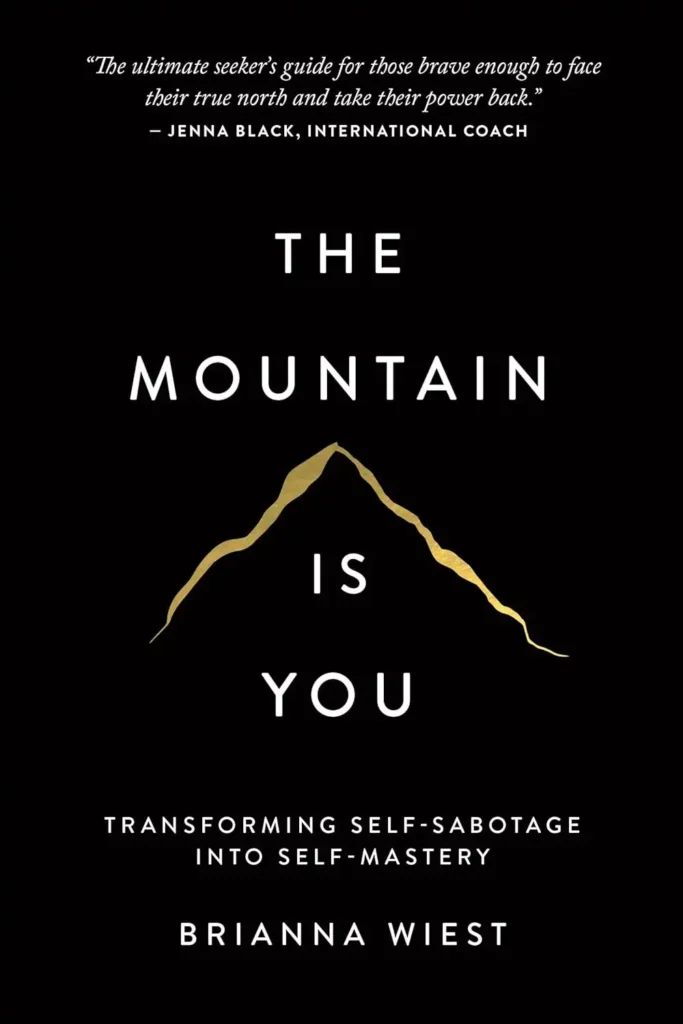
In “The Mountain Is You,” Brianna Wiest identifies being stuck as a symptom of a deeper issue: You’re trying to move forward while unconsciously holding yourself back. Understanding why reveals the path to freedom.
Stuck Is a State of Internal Conflict
The most important insight about being stuck is that it’s not about external circumstances—it’s about internal contradiction. Wiest explains: “Just as a mountain is formed when two sections of the ground are forced against one another, your mountain will arise out of coexisting but conflicting needs.”
You want the new job, but you also want the security of what you know. You want the relationship, but you also want to protect yourself from vulnerability. You want to change, but you also want to avoid the discomfort change requires. These competing desires create paralysis.
The person who can’t seem to apply for new positions isn’t just busy or waiting for the right timing. Part of them wants career advancement; another part is terrified of failure, change, or being revealed as inadequate. Both parts are pulling with equal force, creating the experience of being stuck.
This internal tug-of-war exhausts you. You spend tremendous energy fighting yourself rather than moving in any direction. The stuck feeling isn’t passivity—it’s an active state of contradiction that immobilizes you.
The Comfort of What’s Familiar
One of the primary reasons people stay stuck is that familiar pain feels safer than unfamiliar possibility. Wiest notes: “Human beings are guided by comfort. They stay close to what feels familiar and reject what doesn’t, even if it’s objectively better for them.”
Your brain is designed to keep you alive, not happy. And from a survival perspective, what’s familiar is safer than what’s unknown—regardless of whether the familiar situation is actually good for you. You might stay in a draining job because you know how to navigate it. You might remain in an unfulfilling relationship because at least you know what to expect.
This is why people often sabotage opportunities that could genuinely improve their lives. The new possibility triggers uncertainty, which triggers fear, which triggers self-protective behaviors designed to return you to familiar ground. You’re stuck not because you can’t move but because some part of you believes moving is dangerous.
“We only arrive at rock bottom when our habits begin to compound upon one another, when our coping mechanisms have spiraled so out of control that we can no longer resist the feelings we were attempting to hide,” Wiest explains. Often, people stay stuck until staying stuck becomes more painful than the uncertainty of change.
The Role of Unexpressed Emotions
Being stuck often correlates with having a significant emotional backlog—feelings you haven’t processed that create internal congestion. Wiest describes emotions as “like your email inbox. It might be a simple analogy, but it’s an effective one. When you experience emotions, it’s as though you’re getting little messages from your body stacking up one at a time.”
When you don’t process emotions as they arise, they accumulate. That accumulation creates a low-level constant anxiety that saps your energy and clarity. You can’t move forward decisively because you’re weighed down by unprocessed grief, unexpressed anger, unacknowledged fear.
The person stuck in their career might be carrying unexpressed resentment about how they’ve been treated. The person stuck in a relationship might have unprocessed grief about who they hoped their partner would be versus who they actually are. The person stuck in their personal growth might be avoiding the vulnerability required to change.
Until you create space to feel and process these emotions, they remain like heavy luggage you’re dragging everywhere, making every step harder than it needs to be.
When Your Goals Aren’t Actually Yours
Sometimes being stuck is your psyche’s way of telling you that you’re pursuing the wrong goals. Wiest identifies this pattern: “Sometimes, we fight endlessly to try to force ourselves to want something that we do not really want, and it always leaves us empty, because it isn’t a genuine desire.”
You’re stuck on launching the business because you don’t actually want to run a business—you want the freedom or validation you think it will provide. You’re stuck on finding a partner because you’ve internalized that you “should” be coupled, not because you genuinely desire partnership right now. You’re stuck on achieving a certain status because it’s what’s expected, not what you actually want.
This creates an impossible situation. You can’t generate genuine motivation for goals that aren’t authentically yours. Your resistance isn’t weakness—it’s wisdom. Your inability to move forward is your internal GPS telling you you’re pointed in the wrong direction.
Wiest asks: “Do you want the job, or do you just like how the title sounds? Are you in love with the person, or do you like the idea of the relationship?” These questions cut through the stories you tell yourself to reveal what you actually desire versus what you think you should desire.
The Upper Limit Problem
Another reason people get stuck is that they hit what Gay Hendricks calls their “upper limit”—the maximum amount of success, happiness, or goodness they’re conditioned to handle. Wiest explains: “When you begin to surpass your upper limit, you start to unconsciously sabotage what’s happening in order to bring yourself back to what’s comfortable and familiar.”
This explains why people get stuck just as things are going well. You’re on track for the promotion, then start missing deadlines. Your relationship is thriving, then you pick fights. You’re making progress on your health goals, then binge for a week.
You’re not sabotaging because you hate success—you’re doing it because success takes you beyond your comfort zone for happiness, and that triggers your nervous system’s alarm bells. Being stuck at a certain level isn’t lack of capability; it’s hitting the ceiling of what you’ve allowed yourself to have.
Stuck on Proving Rather Than Living
Wiest identifies a particularly insidious reason people stay stuck: they’re more invested in appearing successful than in actually living well. “You care more about convincing other people you’re okay than actually being okay. You’d rather post photos that make it look like you had a great time than being concerned about whether you actually had a good time.”
When your energy goes into curating an image rather than building a life, you end up stuck. You can’t pursue the actual work that would move you forward because you’re too busy maintaining the appearance of having it together. You can’t make necessary changes because they might look like failure or admission of struggle.
This leads to a doubled-down investment in the stuck position. You’ve spent so much effort convincing others (and yourself) that everything is fine that admitting it’s not feels impossible. So you stay stuck, performing contentment while privately struggling.
The Fantasy of the Completed Self
Many people stay stuck because they’re waiting to become someone before they start living. Wiest addresses this: “You are waiting for someone else to open a door, offer approval, or hand you the life you have been waiting for.”
You’ll start the business when you feel confident enough. You’ll pursue the relationship when you’ve healed enough. You’ll share your work when it’s good enough. This waiting is safe because it never arrives. There’s always another level of readiness you haven’t reached, another credential you need, another internal state you must achieve first.
Being stuck becomes comfortable because you can maintain the fantasy of what you’ll do “when you’re ready” without risking the reality of trying and potentially failing. The ideal version of yourself who will do all these things remains comfortably hypothetical.
Breaking the Pattern of Stuck
Moving forward from being stuck requires several specific shifts. First, you must get brutally honest about where you actually are. Wiest emphasizes: “The first step in healing anything is taking full accountability. It is no longer being in denial about the honest truth of your life and yourself.”
This means writing down every specific problem you’re facing. If finances are keeping you stuck, document every debt, every expense, every source of income. If it’s a relationship, write exactly what’s not working. If it’s your career, detail what’s actually wrong rather than staying in vague dissatisfaction.
Clarity breaks the fog that stuck creates. When you can see the problem precisely, you can begin to address it specifically.
Second, you must identify what being stuck is protecting you from. “Self-sabotage is what happens when we refuse to consciously meet our innermost needs, often because we do not believe we are capable of handling them,” Wiest explains. What would you have to face if you weren’t stuck? What vulnerability would you have to endure? What uncertainty would you have to tolerate?
Often, being stuck protects you from the possibility of trying and failing, or from the exposure that comes with success, or from the discomfort of real change. Understanding what you’re protecting yourself from is essential to releasing the protection you no longer need.
Third, you must take action despite not feeling ready. “It is essential that you learn to take action before you feel like doing it,” Wiest insists. Waiting to feel motivated or confident or certain is waiting to remain stuck forever. Action creates momentum; momentum creates motivation. Not the other way around.
This doesn’t mean forcing yourself through massive changes overnight. It means taking one small step in the direction you want to go, even while feeling uncertain. Apply for one job. Have one honest conversation. Write one page. Make one healthier choice. The action itself begins to shift your internal state.
The Role of Micro-Shifts
Wiest emphasizes that getting unstuck doesn’t require dramatic transformation: “A mind-blowing, singular breakthrough is not what changes your life. A microshift is.”
Microshifts are tiny, barely noticeable changes repeated consistently. Eating slightly better at one meal. Saving a small amount regularly. Having one difficult conversation. Spending ten minutes on the project you’ve been avoiding.
These shifts work because they don’t trigger your resistance. They’re small enough to slip past your psychological defenses. But compounded over time, they create significant change. “Little things, done repeatedly and over time, become the big things,” Wiest notes.
The person who gets unstuck isn’t the one who makes one huge leap. It’s the one who makes small, consistent moves in the right direction until those moves become natural, and the new direction becomes the new normal.
Accepting Discomfort as Part of Movement
Finally, getting unstuck requires accepting that discomfort is part of any significant change. Wiest addresses this directly: “To put an end to your self-sabotaging behavior absolutely means that change is on the horizon. Your new life is going to cost you your old one.”
You will feel uncomfortable. You will question yourself. You will experience fear, doubt, and the urge to return to what’s familiar. This isn’t a sign you’re doing it wrong—it’s confirmation you’re moving beyond your previous limits.
“It’s going to cost you your comfort zone and your sense of direction. It’s going to cost you relationships and friends. It’s going to cost you being liked and understood,” Wiest writes. “It doesn’t matter. The people who are meant for you are going to meet you on the other side.”
Being stuck feels safer than the discomfort of change, but it’s a false safety. You’re stuck in a situation that isn’t serving you, expending tremendous energy maintaining that stuck position, all while opportunities pass and time moves forward.
The real safety—the real security—comes from building capacity to handle discomfort, to tolerate uncertainty, to move forward even when you’re scared. That capacity isn’t something you wait to feel before you start. It’s something you develop by starting before you feel it.
As Wiest concludes: “In the end, it is not the mountain that you must master, but yourself.” Getting unstuck is about mastering your internal contradictions, processing your backlog of emotions, aligning your actions with your actual desires, and developing the courage to move forward into uncertainty.
You’re not stuck because you’re incapable. You’re stuck because you’re in conflict with yourself. Resolve the conflict—identify what you actually want, understand what you’re protecting yourself from, take action despite uncertainty—and you’ll find the stuck feeling begins to release its grip. Not all at once, not perfectly, but progressively, as you remember that you were never actually trapped. You were just learning what you needed to know before you could move forward.