

Self-mastery sounds like an achievement reserved for monks, elite athletes, or people with iron willpower. In reality, it’s far more accessible—and more essential—than most people realize. It’s not about perfection or rigid self-control. It’s about becoming the person you’re capable of being and living a life that genuinely reflects your values.
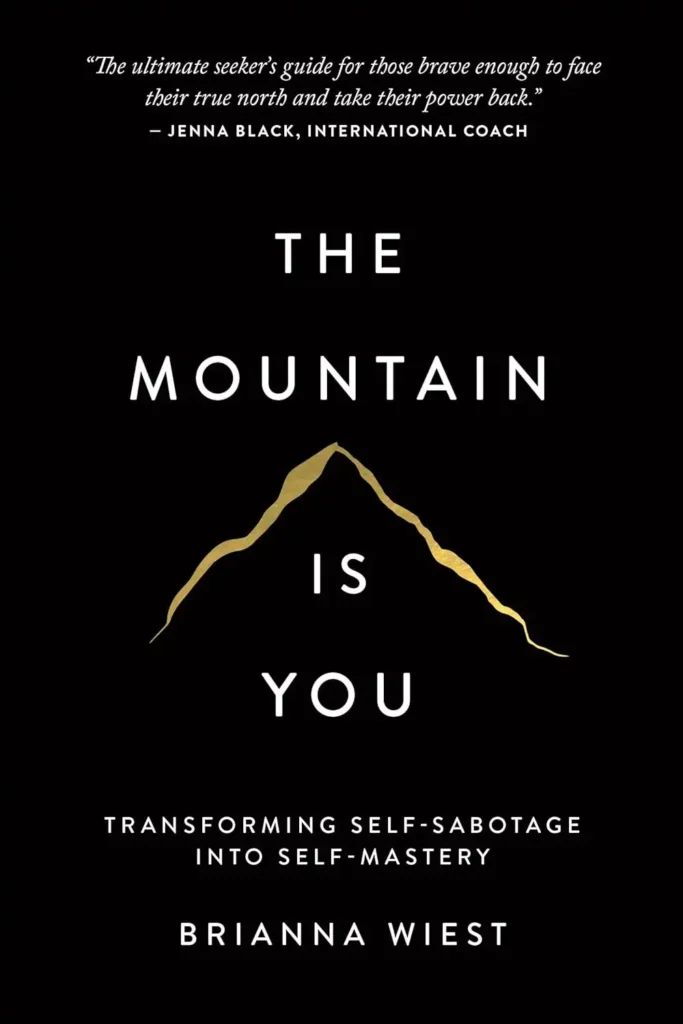
In “The Mountain Is You,” Brianna Wiest presents self-mastery not as a distant ideal but as the natural outcome of doing the internal work required to overcome self-sabotage. “To become a master of oneself is first to take radical and complete responsibility for your life,” she writes. “This includes even that which is beyond your control.”
Self-Mastery Defined
At its core, self-mastery is the ability to govern yourself—your thoughts, emotions, actions, and responses—with wisdom and intention rather than impulse and habit. It’s not about suppressing your humanity or forcing yourself into some idealized form. It’s about developing such deep understanding of yourself that you can work with your nature rather than constantly fighting against it.
Wiest describes it as understanding that “it is not what happens, but the way one responds, that determines the outcome.” This distinction is everything. You can’t control circumstances, other people, or many external factors in your life. But you can develop mastery over how you interpret and respond to what happens.
The person with self-mastery isn’t someone who never faces challenges, never feels difficult emotions, or never makes mistakes. They’re someone who has developed the capacity to move through challenges without being destroyed by them, feel difficult emotions without being controlled by them, and make mistakes without being defined by them.
The Foundation: Self-Awareness
Self-mastery begins with self-awareness—the ability to observe yourself clearly without judgment or distortion. Wiest emphasizes throughout the book that you cannot change what you cannot see, and most people are remarkably unaware of their actual thoughts, feelings, and patterns.
“When you start thinking that you don’t know what to do with your life, what you really mean is that you don’t yet know who you are,” she writes. Self-awareness means knowing:
- What actually triggers you and why
- What your genuine values are versus what you think they should be
- What patterns you repeat across different areas of life
- What unconscious beliefs shape your choices
- What emotions you’re actually feeling beneath the surface emotions
This level of self-awareness requires what Wiest calls “deep psychological excavation.” You can’t just skim the surface of why you do what you do. You have to be willing to ask difficult questions and sit with uncomfortable answers.
The practice of self-observation—watching your thoughts and reactions without immediately identifying with them—is central to building this awareness. “Mental health and self-mastery is the ability to see and feel and experience a thought without responding to it,” Wiest explains.
Emotional Intelligence as Core Skill
Self-mastery is impossible without emotional intelligence, which Wiest defines as “the ability to understand, interpret, and respond to your emotions in an enlightened and healthy way.”
Most people oscillate between two extremes: suppressing emotions entirely or being completely controlled by them. Neither represents mastery. True emotional intelligence means:
- Recognizing emotions as they arise
- Understanding what triggered them
- Identifying what they’re trying to communicate
- Choosing how to respond rather than automatically reacting
- Allowing emotions to move through without suppression or dramatization
Wiest clarifies an important distinction: “Suppressing is unconscious; controlling is conscious. When you’re controlling your emotions, you do know how you feel, and your behavior seems within your control.”
The person with emotional mastery feels anger but doesn’t lash out destructively. They feel fear but don’t let it paralyze them. They feel sadness but don’t collapse into it. They have developed the capacity to be with their emotions without being overtaken by them.
Taking Radical Responsibility
One of the most challenging aspects of self-mastery is what Wiest calls “radical and complete responsibility.” This doesn’t mean blaming yourself for everything that happens—it means recognizing that your response to what happens is always within your control.
“The truth is that there are some things in life that are outside of your control. If you focus on them, you will miss something really important: the majority of your life is the direct result of your actions, behaviors, and choices,” she writes.
The person avoiding self-mastery focuses on what others did, what circumstances prevented, what wasn’t fair. The person pursuing self-mastery asks: “Given that this happened, what’s my best response? What’s within my control? What can I do from here?”
This shift from victim to agent is essential. Not because everything is your fault, but because focusing on what you can’t control keeps you powerless while focusing on what you can control creates possibility.
Disconnecting Feeling From Action
A crucial aspect of self-mastery is learning to act based on values and goals rather than temporary emotional states. Wiest emphasizes: “It is essential that you learn to take action before you feel like doing it. Taking action builds momentum and creates motivation. These feelings will not come to you spontaneously; you have to generate them.”
Most people wait to feel motivated before taking action. They wait to feel confident before trying something new. They wait to feel certain before making a decision. This approach keeps them perpetually waiting because those feelings don’t arrive spontaneously—they’re created through action.
“We are not held back in life because we are incapable of making change. We are held back because we don’t feel like making change, and so we don’t,” Wiest notes. Self-mastery means recognizing this dynamic and acting anyway.
The person with self-mastery goes to the gym when they don’t feel like it because they value health. They have the difficult conversation when they don’t feel like it because they value integrity. They work on the project when they don’t feel like it because they value their goals more than their temporary comfort.
This isn’t about forcing yourself to be miserable—it’s about not letting momentary feelings dictate whether you honor your commitments to yourself.
Building Mental Strength
Wiest identifies several characteristics of mental strength that contribute to self-mastery:
The ability to plan effectively: “Mentally strong people are planners. They think ahead. They prepare. They do what’s best for the long-term outcome.” This isn’t about rigid control but about thoughtful preparation that makes good choices easier.
Humility about your place in the world: “Nobody is evaluating you the way you are evaluating you. They mostly take you at face value.” This frees you from the paralysis of imagined judgment.
Willingness to ask for help: “You are not supposed to know everything. You are not supposed to be good at everything.” Self-mastery includes knowing your limits and seeking appropriate support.
Intellectual honesty: “Stop trying to be psychic, because this is a cognitive distortion.” Mental strength means not pretending you can predict the future or know others’ intentions with certainty.
Outcome ownership: “In the grand scheme of your life, the outcomes that really matter are the ones that are almost completely within your control.” This prevents the victim mentality that keeps people stuck.
The Role of Principles
Self-mastery requires operating from principles rather than impulses. Wiest distinguishes between these: “A principle is a fundamental truth that you can use to build the foundation of your life. A principle is not an opinion or a belief. A principle is a matter of cause and effect.”
Principles are reliable because they’re based on how things actually work rather than how you wish they worked or how you feel in the moment. Wiest gives examples:
- Financial principle: Live beneath your means
- Relationship principle: Communicate honestly
- Health principle: Consistent small actions compound over time
- Work principle: Deliver more value than you’re paid for
The person governed by principles doesn’t need to constantly make decisions from scratch. They have frameworks that guide their choices even when emotions are intense or circumstances are confusing.
“The outcomes of life are not governed by passion; they are governed by principle,” Wiest notes. This is liberating because passion fluctuates, but principles remain stable.
Developing Discernment
A key aspect of self-mastery is discernment—the ability to distinguish between what’s true and what’s not, what serves you and what doesn’t, what’s your responsibility and what isn’t.
Wiest addresses this in her discussion of feelings versus facts: “Though your emotions are always valid and need to be validated, they are hardly ever an accurate measure of what you are capable of in life. They are not always an accurate reflection of reality.”
Self-mastery means being able to observe: “I feel like a failure” without concluding “I am a failure.” You can acknowledge the feeling while recognizing it’s not an objective truth.
It also means distinguishing between intuition and fear, between healthy self-protection and self-sabotage, between genuine needs and avoidance patterns. This discernment develops through practice and honest self-observation.
The Practice of Self-Mastery
Wiest makes clear that self-mastery isn’t a destination but an ongoing practice. It requires:
Daily micro-shifts: “If you want to change your life, you need to make tiny, nearly undetectable decisions every hour of every day until those choices are habituated.” Small, consistent actions compound into transformation.
Regular self-examination: “Your life is just beginning. One day, the mountain that was in front of you will be so far behind you, it will barely be visible in the distance. But who you become in learning to climb it? That will stay with you forever.”
Continuous growth: “The objective of being human is to grow. We see this reflected back to us in every part of life.” Self-mastery includes accepting that you’re never finished evolving.
Emotional processing: “When you stop engaging in self-sabotaging behavior, repressed emotions that you weren’t even aware of will start to come up.” Mastery requires doing the ongoing work of feeling and releasing rather than suppressing.
Value alignment: “When your actions align with your genuine values, following through becomes natural.” Regular assessment of whether your life reflects your actual values is essential.
What Self-Mastery Isn’t
Understanding what self-mastery isn’t helps clarify what it is:
It’s not perfection. “To have a mountain in front of you does not mean you are fundamentally broken in some way. Everything in nature is imperfect, and it is because of that imperfection that growth is possible.”
It’s not constant happiness. “Emotional health is not the experience of being perpetually calm and happy all of the time. It is the experience of allowing a range of emotions, both good and bad, and not getting too stuck on either one.”
It’s not rigid self-control. Self-mastery is working with your nature, not constantly fighting against it. It’s developing wisdom about when to be disciplined and when to be flexible.
It’s not isolation. “Though many people are codependent and lean far too heavily on others to give them a sense of safety and self, leaning too far the other way—where you believe that you don’t need anyone or anything and that you can do everything yourself—is not healthy, either.”
The Payoff of Self-Mastery
Why pursue self-mastery? Because it fundamentally transforms your experience of life. Wiest describes the outcome:
“When you reach the peak of it all—whatever that may be for you—you will look back and know that every step was worth it. More than anything, you will be overwhelmingly grateful for the pain that led you to begin your journey.”
The person with self-mastery:
- Makes decisions from clarity rather than confusion
- Experiences emotions without being controlled by them
- Takes responsibility without self-blame
- Acts from values rather than impulses
- Handles setbacks without being destroyed
- Pursues growth without self-judgment
- Builds a life that genuinely reflects who they are
Most importantly, they experience a profound sense of freedom—not from challenges or difficulties, but from being at the mercy of their unconscious patterns, unexamined beliefs, and automatic reactions.
The Journey to Self-Mastery
Wiest frames the entire journey beautifully: “Your life is just beginning. One day, the mountain that was in front of you will be so far behind you, it will barely be visible in the distance. But who you become in learning to climb it? That will stay with you forever. That is the point of the mountain.”
Self-mastery isn’t about conquering some external obstacle. It’s about the person you become in the process of facing yourself honestly, doing the difficult internal work, and building the capacity to live with intention rather than impulse.
“In the end, it is not the mountain that you must master, but yourself,” she concludes. This is both the challenge and the promise: The mountain before you is showing you what you need to master within yourself. Once you do that work, the external obstacle often dissolves or becomes far easier to navigate.
Self-mastery is available to anyone willing to do the work. It doesn’t require special talents or ideal circumstances. It requires honest self-examination, emotional intelligence, willingness to take responsibility, consistent action aligned with values, and patience with the non-linear nature of growth.
The path isn’t easy, but the freedom it offers—freedom from being your own worst enemy, freedom to build a life you genuinely want—makes every step worth taking.