Feeling lost doesn’t mean you lack purpose. Learn how purpose emerges through alignment, self-honesty, and small consistent actions.
The question haunts you at 3 AM and during long commutes: “What am I supposed to be doing with my life?” Everyone else seems to have figured it out. They have careers that excite them, projects that energize them, a clear sense of direction. Meanwhile, you’re stuck in what feels like existential limbo, wondering if you missed the day they handed out life purpose assignments.
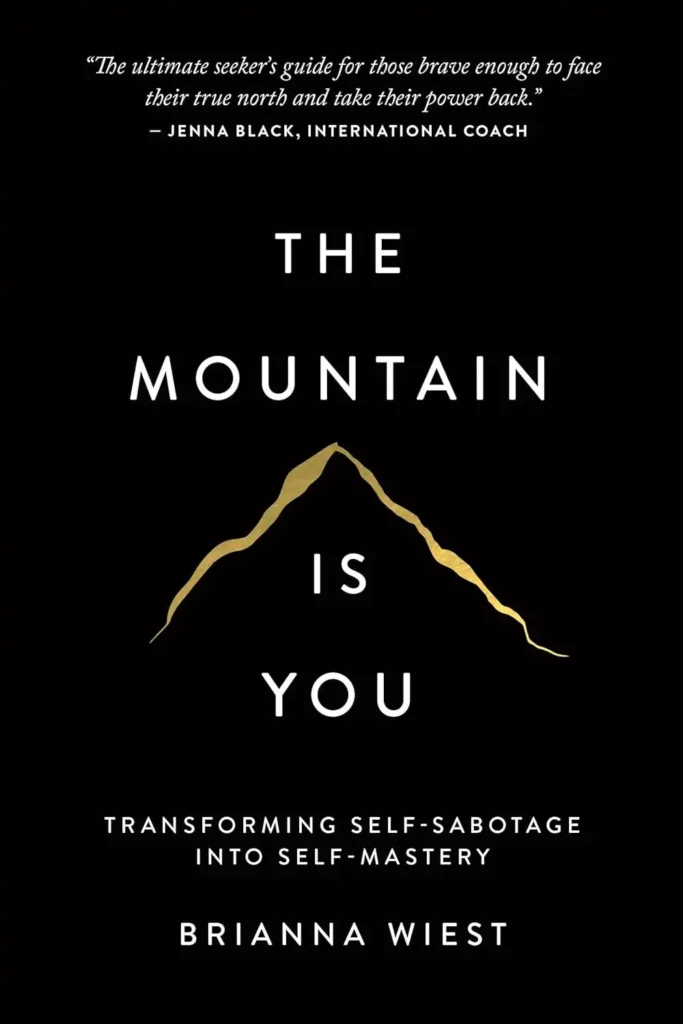
In “The Mountain Is You,” Brianna Wiest dismantles the mystical notion of purpose and offers something more practical and liberating. Your purpose isn’t a singular destination you’re meant to discover—it’s something you build through attention to who you are and what the world needs from you.
The Myth of the Perfect Purpose
The first obstacle to finding your purpose is the assumption that it’s a specific, singular thing you’re meant to do for your entire life. Wiest challenges this: “Your purpose is not one job, it is not one relationship, it is not even one career field. Your purpose is, first and foremost, just to be here.”
This reframes everything. You’re not searching for the one perfect career, relationship, or life path that will make everything make sense. You’re recognizing that your existence itself has already shifted the world in ways invisible to you. Without you, nothing would be exactly as it is right now.
This doesn’t mean your career doesn’t matter or that any path is equally fulfilling. It means the pressure to find the one right answer can be released. Your purpose evolves. What you’re meant to do at 25 differs from what you’re meant to do at 45. The person fixated on finding their permanent purpose often misses the purpose available to them right now.
“Your purpose today may have been to offer someone a smile when they were at their lowest. Your purpose this decade may be the job you’re in,” Wiest writes. This perspective shifts purpose from distant destination to present moment—a radical reorientation for people paralyzed by not knowing their “calling.”
Why You Actually Don’t Know What You Want
When people say they don’t know their purpose, what they often mean is they don’t know themselves. Purpose isn’t out there waiting to be found—it emerges from honest self-examination.
Wiest identifies the core issue: “When you start thinking that you don’t know what to do with your life, what you really mean is that you don’t yet know who you are.” This is why all the career aptitude tests and vision board workshops fall short. They’re trying to identify what you should do before you understand who you are.
The challenge is that truly knowing yourself requires confronting aspects you’ve been avoiding. Maybe you’ve spent years performing the person you think you should be rather than revealing the person you are. Maybe you’ve adopted others’ dreams so thoroughly you can’t distinguish them from your own. Maybe you’re afraid that who you really are won’t be acceptable, so you keep that self hidden even from yourself.
Getting clear on your purpose requires getting honest about your actual interests, values, and capabilities—not the ones you wish you had or think you should have. It means admitting that you’re not actually passionate about the career your parents wanted for you, even though you’ve spent a decade pursuing it. It means acknowledging that what lights you up might not be prestigious or lucrative.

The Intersection of Skills, Interests, and Need
Rather than purpose being some mystical calling you wait to discover, Wiest offers a practical framework: “Your life purpose is the point at which your skills, interests, and the market intersect.”
This three-part formula removes the mystery. Your skills are what you’re naturally good at—the things that come easier to you than to most people. Your interests are what genuinely engages you, what you’d do even without external reward. The market (or world’s needs) is what people actually need or will pay for.
Where these three overlap is where purpose lives. You might be skilled at organizing systems, interested in environmental issues, and the world needs better sustainability programs. That intersection points toward purpose. You might be skilled at explaining complex ideas, interested in psychology, and people need accessible mental health information. That’s another intersection.
The key is that it’s not just one thing. You’re not searching for a single perfect overlap—you’re looking for areas where your natural abilities, genuine interests, and the world’s needs create mutual value. This might show up in multiple ways across your lifetime.
Following Pain to Purpose
Counterintuitively, your purpose is often found through examining your pain, not just your passions. Wiest notes: “It is often found through pain. Most people come into awareness of their purpose not because they are effortlessly clear on what their talents are and how they can best utilize them, but because at some point, they find themselves lost, depleted, exhausted, and with their backs against the wall.”
The person who starts a nonprofit for childhood cancer research often has a personal connection to that pain. The therapist specializing in trauma frequently has their own history of trauma work. The financial advisor helping people escape debt likely struggled with money themselves.
This isn’t universal—you don’t need to suffer to find purpose. But for many people, their greatest breakdown becomes their breakthrough. The crisis that forced them to confront themselves, develop new skills, and find meaning became the foundation of their life’s work.
“In experiencing hardship and challenge, we begin to realize what really matters to us,” Wiest explains. Pain clarifies priorities. It burns away what’s superficial and reveals what you’re actually willing to fight for. It develops capacities you didn’t know you needed. It opens your eyes to needs others have that you now understand intimately.
The Questions That Point Toward Purpose
Instead of waiting for purpose to announce itself, Wiest offers specific questions to help you identify it:
What, and who, is worth suffering for? Everything involves difficulty. The question isn’t whether your purpose will be easy—it’s what difficulties you’re willing to endure. What work would you do even when it’s frustrating? Who would you show up for even when it’s inconvenient?
What comes most naturally to you? Often we dismiss our natural talents precisely because they’re easy for us. We assume that if something isn’t hard, it can’t be valuable. But what flows effortlessly from you is usually pointing toward what you’re meant to develop and share.
What would your ideal daily routine look like? Forget the impressive title or the fantasy of what you’ll do once you’ve “made it.” What do you actually want to do day-in and day-out? Many people pursue careers they think will make them happy only to realize they hate the daily reality of the work.
Who do you want to be remembered as? Your resume lists accomplishments; your eulogy reveals character. What do you want people to say about who you were and how you affected them? This question cuts through external validation to what you actually value.
Close your eyes and imagine the best version of yourself—what is that person like? Your ideal self isn’t arbitrary. The qualities you admire, the life you envision—these reveal what you’re actually capable of and drawn toward. You don’t fantasize about things completely disconnected from your potential.
Purpose Evolves
One reason people feel paralyzed about purpose is the assumption that once they identify it, they’re locked into that path forever. Wiest liberates readers from this misconception: “Your purpose is a dynamic, evolving thing.”
What you’re meant to focus on at 25—building skills, exploring possibilities, establishing yourself—differs entirely from what you’re meant to focus on at 55. The person desperate to find their permanent purpose often can’t see the purpose available in their current season of life.
Maybe right now your purpose is learning to be reliable, to show up, to develop basic competencies. Maybe it’s healing from trauma so you can eventually help others heal. Maybe it’s raising children who feel genuinely loved. Maybe it’s mastering a craft that will later serve a larger mission you can’t yet see.
Each season has its purpose. Trying to skip ahead to the “final” purpose means missing the preparation required to handle it. The entrepreneur who builds a multimillion-dollar company usually spent years developing skills in smaller ventures. The author who writes the transformative book likely spent a decade writing things nobody read. The purpose you can see now is preparing you for the purpose you can’t yet see.
When Your Purpose Isn’t Your Job
Another limiting belief about purpose is that it must be your career. Wiest offers a more expansive view: “The most important thing you can do to live meaningfully is to work on yourself. To consciously become the happiest, kindest, and most gracious version of yourself.”
Your job might just be how you pay bills. Your actual purpose might be how you show up in relationships, the art you create in spare time, the community you build, the person you’re becoming. Not everyone’s purpose is their profession—and that’s completely fine.
This relieves the pressure of needing to monetize every interest or turn every passion into a career. Maybe your purpose is being the stable, present parent you wish you’d had. Maybe it’s creating beauty through a hobby nobody sees but you. Maybe it’s the person people know they can count on during crisis.
The key is that purpose is about contribution and becoming, not just about doing. Who you’re becoming through your choices, relationships, and daily actions matters as much as what you’re producing or achieving.
The Role of Action in Discovering Purpose
While self-reflection is essential, Wiest emphasizes that purpose isn’t discovered through endless contemplation—it’s revealed through action. “Instead of trying to predict what you can’t know, and start putting your energy toward building what you can.”
You don’t think your way to purpose; you act your way there. You try things. You notice what energizes versus depletes you. You pay attention to what people value in what you offer. You follow threads of curiosity. You build skills incrementally.
The person waiting to feel certain about their purpose before taking action will wait forever. Certainty comes from experience, not contemplation. You discover what you’re good at by doing it. You find what fulfills you by trying different things and noticing your response.
“Your ultimate purpose is to become the ideal version of yourself. Everything else flows from there,” Wiest concludes. This shifts the entire framework. You’re not searching for an external mission to complete you. You’re becoming more fully yourself, and purpose emerges organically from that becoming.
Making Peace with Uncertainty
Finally, Wiest addresses the discomfort of not having everything figured out: “Knowing your purpose also doesn’t necessarily mean your life will henceforth be easy or that you’ll always know what to do. In fact, when you are genuinely on your own path, the future won’t be clear, because if it is, you’re actually following someone else’s blueprint.”
This is simultaneously terrifying and liberating. The uncertainty you feel about your path isn’t proof you’re lost—it might be proof you’re actually on your own path rather than following someone else’s template. When everything is mapped out clearly, it’s because someone else drew the map.
Your purpose isn’t something you find once and follow forever. It’s something that unfolds as you pay attention to yourself, contribute to the world’s genuine needs, and become more fully who you’re capable of being. The search for purpose isn’t a treasure hunt with a specific end point—it’s an ongoing practice of alignment between who you are, what you can offer, and what the world needs.
“At the end of your life, your purpose will be defined not by how you struggled, what circumstances you were in, or what you were supposed to do, but how you responded in the face of adversity, who you were to the people in your life, and what you did each day that slowly, in its own unique way, changed the course of humanity,” Wiest reminds us.
Your purpose is being built right now, in this moment, through the choices you make, the person you’re becoming, and the way you show up. Stop searching for it in the distance. Start noticing it in the present.