Letting go of the past isn’t about forgetting—it’s about integration. Learn why old pain lingers and how understanding leads to emotional release.
You’ve tried affirmations. You’ve told yourself it’s time to move on. You’ve read the quotes about forgiveness and fresh starts. And still, the past follows you—showing up in your reactions, your relationships, your 3 AM thoughts. The question isn’t whether you want to let go. It’s why letting go feels impossible, and what actually works when all the conventional advice falls short.
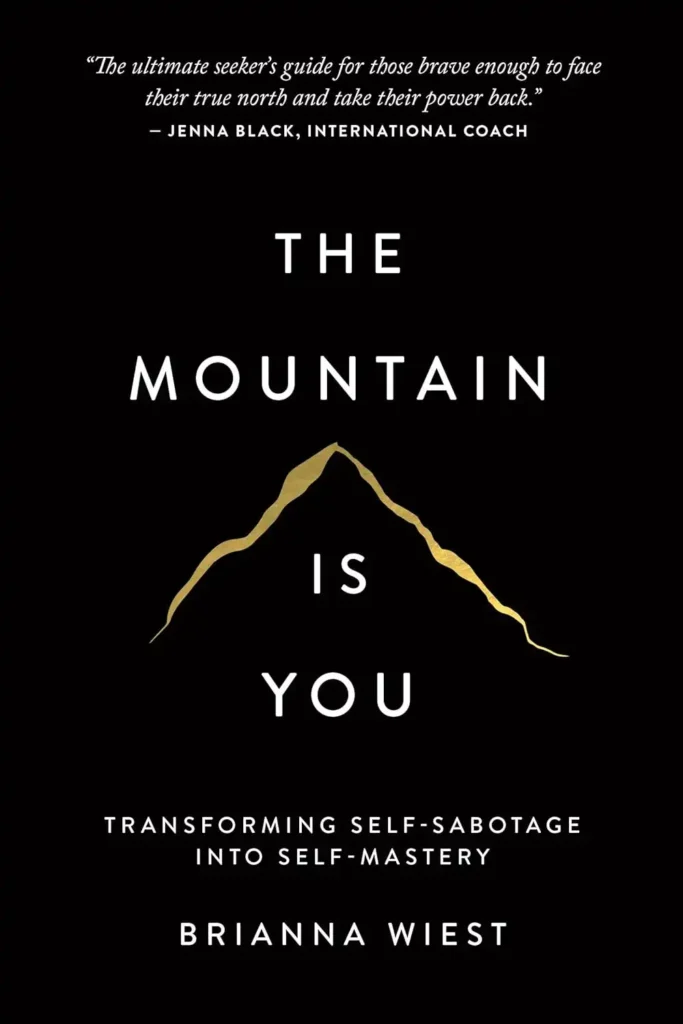
In “The Mountain Is You,” Brianna Wiest offers a radically different approach to releasing the past. Her insight: you can’t force yourself to let go, and trying to do so usually makes things worse. Instead, you need to understand what keeps you tethered—and it’s probably not what you think.
Why “Just Let Go” Doesn’t Work
The most common advice for releasing the past is some variation of “stop dwelling on it” or “choose to move on.” If you’re still struggling with something from your past, this advice probably makes you want to throw something. It’s not that you don’t want to move on—you literally don’t know how.
Wiest explains why: “You cannot force yourself to let go, no matter how much you know you want to. Right now, you are being called to release your old self: your prior afflictions, past relationships, and all of the guilt from the time you spent denying yourself what you really wanted and needed out of life.”
The problem with “just let go” is that it treats the past like something you’re voluntarily gripping. In reality, you’re holding on because letting go feels dangerous. The past—painful as it is—provides a strange sense of security. You know that pain. You’ve survived it. The unknown of who you’ll be without it? That’s terrifying.
What Really Keeps You Stuck
Most people assume they’re stuck on past events because those events were so significant. A devastating breakup. A career failure. A family trauma. But Wiest offers a different perspective: “Ruminating over the past doesn’t mean you want to return to it. Not being able to forget what happened doesn’t mean you’re content to keep reliving it again and again.”
You’re not stuck because you want to be. You’re stuck because you were never given the space to fully process what happened. Life doesn’t pause for grief. After something life-altering, society gives you a few days of sympathy, maybe a week off work, and then expects you to carry on. So you do what you have to do: you compress the experience, pack it away, and keep moving.
“When your mind is stuck in the past, it isn’t because it wants to return there; it’s because you were impacted far more deeply than you ever realized, and the aftershocks are still rippling through you,” Wiest writes. The past isn’t haunting you because you’re weak or stuck—it’s trying to get your attention because something within you still needs resolution.
The Emotional Backlog
Think of your emotions like email notifications. When something happens that triggers strong feelings, it’s like receiving a message. If you don’t open it and process it, the notification stays there, accumulating with all the other unopened messages. Eventually, you’re 1,000+ notifications deep, unable to focus on anything current because the backlog is overwhelming.
Wiest describes this as your emotional backlog: “When you experience emotions, it’s as though you’re getting little messages from your body stacking up one at a time. If you don’t ever open them, you end up 1,000+ notifications deep, totally overlooking crucial information and important insights that you need to move your life forward.”
You can’t delete these notifications through willpower or positive thinking. You have to actually open them, read them, and respond appropriately. This is what it means to process emotions—not to eliminate them, but to allow them their full expression so they can move through and resolve.
The Myth of Moving On Without Feeling
One of the most destructive myths about letting go is that you should be able to do it without feeling the full weight of your emotions. You’re supposed to acknowledge the past, learn from it, and gracefully move forward—all while maintaining your composure and productivity.
This is impossible and unhealthy. Real release requires real feeling.
“You start to let go on the day you take one step toward building a new life and then let yourself lie in bed and stare at the ceiling and cry for as many hours as you need,” Wiest writes. “You start to let go on the day you realize that you cannot continue to revolve around a missing gap in your life, and going on as you were before will simply not be an option.”
Letting go doesn’t mean you stop caring or feeling. It means you stop resisting those feelings. You allow yourself to be genuinely sad about what you lost, angry about what was unfair, or disappointed about what didn’t work out. When you give yourself permission to feel without judgment, something shifts. The emotion that seemed permanent begins to move.
The Practice of Emotional Validation
One of Wiest’s most powerful insights involves learning to validate your own feelings rather than waiting for external validation. Most people unconsciously seek situations that will justify how hurt they feel. If they can show others how bad it was, maybe then they’ll receive permission to grieve.
But Wiest explains: “When we cannot validate our own feelings, we go on a never-ending quest to try to force others to do it for us, but it never works. We never really get what we need.” External validation is temporary and conditional. Self-validation is what actually creates the safety to process and release.
To validate your feelings means simply acknowledging them without judgment: “It makes sense that I feel this way. Anyone in my situation would feel similarly. What I’m feeling is okay.” You don’t need to justify the feeling or prove its validity to anyone. You just need to acknowledge that it’s there and that having it doesn’t make you weak or wrong.
Releasing Through Visualization
Beyond emotional processing, Wiest offers a specific psychological technique for releasing past experiences: returning to them through memory and rewriting the narrative from your current, wiser perspective.
“In order to reconcile this, you have to begin to challenge these preexisting ideas and then adopt new ones,” she explains. This involves closing your eyes, finding the feeling in your body associated with the past pain, and following it back to its origin. Once you’ve identified the memory, you imagine your current self sitting beside your younger self during that difficult moment.
You offer that younger version of yourself the wisdom, comfort, and guidance they needed then. You tell them why this painful experience is actually redirecting them toward something better. You assure them that everything will be okay, that they’ll get through this, and that good things are coming.
This technique works because trauma often leaves parts of us emotionally frozen at the age we were when it occurred. By mentally returning with adult wisdom and compassion, you help that younger self complete the emotional processing that got interrupted. You give yourself what you needed then, which creates permission to move forward now.
Building a New Life
The most counterintuitive insight Wiest offers about letting go is this: you don’t let go by focusing on the past—you let go by building a future so compelling that the past loses its grip naturally.
“You let go when you build a new life so immersive and engaging and exciting, you slowly, over time, forget about the past,” she writes. When you’re actively creating, learning, connecting, and growing, the mental and emotional energy you were using to rehash the past gets redirected toward the present.
This isn’t about distraction or avoidance. It’s about recognizing that you can’t force yourself to stop thinking about something by trying harder not to think about it. That only strengthens the obsession. Instead, you give your mind and heart something else to engage with—something that genuinely matters to you.
“What you will realize is that you are still standing,” Wiest notes. Even after the worst moments, even after losing what you thought you couldn’t live without, you’re still here. And if you’re still here, you’re capable of building something new.
The Timeline of Letting Go
Letting go isn’t a one-time event. It’s a process that happens in layers, often over months or years. You’ll have days where you feel completely free, followed by days where old feelings resurface. This isn’t failure—it’s normal.
Wiest describes this phenomenon: “You do not let go the moment someone tells you to ‘move on,’ the day you realize you have to admit certain defeat, the heart-dropping second it occurs to you that hope is, indeed, futile.” Instead, letting go happens gradually as you take small steps toward building a new life while allowing yourself to feel whatever arises.
One day you’ll realize you went an hour without thinking about it. Then a day. Then a week. Eventually, years will pass and what once consumed you becomes a distant memory, something you can recall without the emotional charge that used to accompany it.
When Holding On Serves a Purpose
Sometimes, what looks like an inability to let go is actually an unconscious attachment serving a specific purpose. Maybe holding onto anger toward an ex protects you from the vulnerability of dating again. Maybe staying fixated on a past failure justifies not trying something new. Maybe keeping a grievance alive gives you a sense of identity or connection to someone you lost.
Wiest encourages examining what function your attachment might serve: “When you’re struggling, the most insulting and difficult thing that someone can tell you is to ‘just relax’ or ‘just enjoy yourself.’ When you’re in survival mode, the last thing you can possibly think about is just sitting back and rolling with the punches.”
If you’ve tried to let go and can’t, ask yourself: What would I have to face if I did let go? What would I have to do differently? What would I lose besides the pain? Sometimes the pain is familiar company, and letting it go means stepping into an unknown that feels more frightening than the hurt you know.
The Paradox of Letting Go
The ultimate paradox of letting go is that you can only do it when you stop trying to force it. When you accept that you’re still affected, still processing, still healing—that’s when the grip begins to loosen. When you validate your feelings instead of judging them, they begin to flow through instead of staying stuck.
As Wiest beautifully expresses: “Everything you lose becomes something you are profoundly grateful for. With time, you see that it was not the path. It was what was standing in your way.”
The past that hurts you now may one day be something you’re grateful for—not because the pain was good, but because it redirected you, taught you, or opened you to something you couldn’t have accessed otherwise. But you can’t force yourself to that gratitude prematurely. You have to feel what you feel, process what needs processing, and trust that the release will come when you’re ready.
Letting go of the past isn’t about forgetting or minimizing what happened. It’s about integrating the experience so completely that it no longer defines your present or dictates your future. It’s about building a life so full and meaningful that the past becomes simply one chapter in a much larger story—a story you’re still writing.