Discover how emotional hoarding affects your life, why letting go feels difficult, and powerful ways to break free from emotional clutter and live lighter.
Emotional Hoarding: The Silent Weight You Didn’t Know You Carry
Emotional hoarding is one of those concepts that hits you differently once you truly understand it. At first glance, it sounds abstract—almost like a metaphor. But the moment you begin to reflect on your own experiences, it becomes uncomfortably real.
Emotional hoarding is the act of collecting, storing, and holding onto unresolved emotions without ever truly processing or releasing them. These emotions can include fear, guilt, shame, anger, regret, or even unspoken grief. Individually, they may seem manageable. But over time, they accumulate.
And that accumulation changes everything.
In Emotional Hoarding by Laurie Davies , this inner buildup is compared to a cluttered home. At first, the clutter lines the walls and feels harmless. Then it begins to stack. Eventually, it spills into every room, limiting movement, functionality, and freedom.
That’s exactly what happens inside us.
You may still be going to work, maintaining relationships, and functioning on the surface—but internally, space is shrinking. Emotional clutter crowds your ability to think clearly, respond calmly, and feel fully present.
And the most dangerous part is that you may not even realize it’s happening.
Why Emotional Hoarding Feels So Natural
If emotional hoarding is so harmful, why do we do it?
Because at one point, it worked.
Every emotion you’ve held onto likely served a purpose at some stage of your life. Fear kept you alert. Guilt helped you reflect. Anger protected your boundaries. Shame may have helped you adapt in difficult environments.
These emotions were not random—they were adaptive.
The problem is that what once helped you survive can later keep you stuck.
Your mind doesn’t always recognize when it’s safe to let go. It defaults to what it knows. So instead of processing emotions and releasing them, it stores them just in case they are needed again.
This creates a repeating pattern. You experience something, feel it, suppress it, and store it. Then you repeat the cycle.
Over time, this loop becomes automatic. You don’t consciously choose emotional hoarding. It simply becomes your default response.
The Difference Between Emotional Baggage and Emotional Hoarding
People often say everyone has emotional baggage, and that is true. But emotional hoarding goes further than that.
Emotional baggage refers to unresolved past experiences that still affect you. Emotional hoarding is the ongoing accumulation of those unresolved emotions with no intention of letting them go.
It is not just carrying weight. It is constantly adding more to it.
Think of it like a suitcase. Emotional baggage is what is already inside. Emotional hoarding is continuing to pack it without ever unpacking.
Eventually, the suitcase becomes too heavy to carry.
And when it breaks open, it doesn’t happen quietly.
Signs You Might Be Emotionally Hoarding
Emotional hoarding rarely announces itself clearly. It hides behind normal habits and behaviors.
But there are signals if you pay attention.
You might be emotionally hoarding if you replay past mistakes repeatedly, hold onto grudges longer than you want to admit, feel overwhelmed by emotions you cannot explain, avoid difficult conversations, or react more intensely than situations seem to require.
You may also feel mentally full all the time, as if there is no space to breathe or think clearly.
These are not random experiences. They are indicators that your internal space is overcrowded.
Just like physical clutter, emotional clutter does not disappear on its own.
How Emotional Hoarding Impacts Your Life
The impact of emotional hoarding reaches far beyond your thoughts. It affects your entire life.
Mentally, your mind becomes noisy. Thoughts overlap, and clarity disappears. Making decisions becomes harder because everything feels emotionally charged.
Emotionally, you may swing between numbness and overwhelm. Small triggers can lead to big reactions. Emotions that once felt manageable begin to feel unpredictable.
In relationships, emotional hoarding can create distance. You may withdraw to protect yourself or overreact because of unresolved pain. Trust and communication become harder.
Physically, stress builds in the body. Tension, fatigue, and other symptoms can appear as a result of carrying too much emotional weight.
Emotional hoarding does not stay contained. It spills into every part of your life.
The Illusion of Control
One of the most deceptive aspects of emotional hoarding is that it can feel like control.
Holding onto emotions can make you feel prepared. You might believe that remembering pain will protect you, or that staying guarded will keep you safe.
But this sense of control is an illusion.
In reality, the emotions you are holding onto are shaping your reactions, influencing your decisions, and limiting your growth.
True control does not come from holding on. It comes from understanding and releasing.
Why Letting Go Feels So Difficult
Letting go is often misunderstood. It does not mean forgetting or ignoring what happened. It means releasing the emotional weight attached to it.
But letting go feels difficult for several reasons.
You may feel like you are losing part of your identity. You may believe that pain gives meaning to your experiences. You may fear making the same mistakes again. Or you may simply not know who you are without those emotions.
Emotional hoarding can become part of how you define yourself.
So letting go can feel like losing something important, even if it is hurting you.
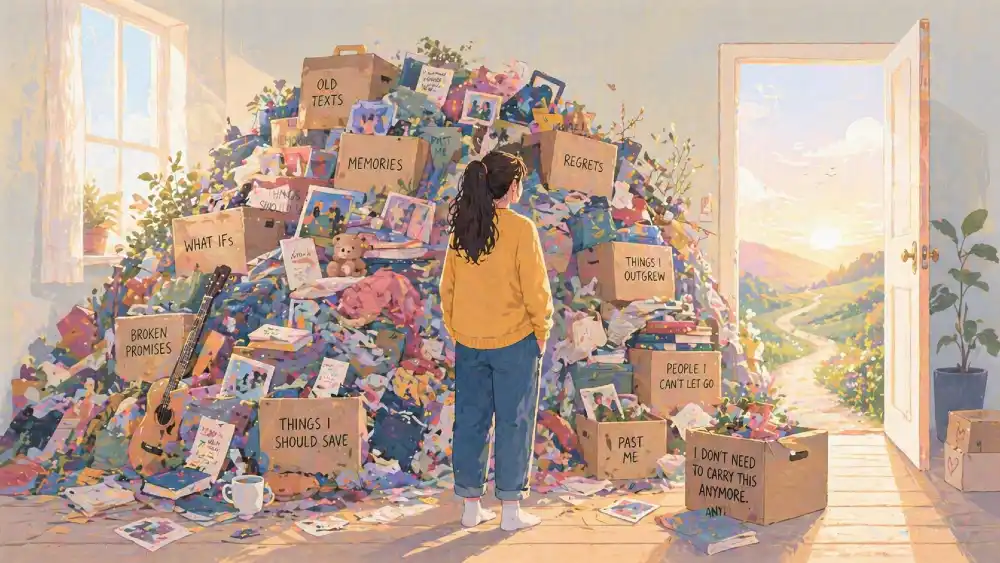
How to Begin Letting Go of Emotional Hoarding
The good news is that emotional hoarding is not permanent. It can be changed with awareness and intention.
Start by becoming aware of your emotional patterns. Notice what you tend to hold onto and why.
Then acknowledge those emotions instead of suppressing them. Allow yourself to feel them fully.
Reflect on their purpose. Ask yourself whether they still serve you or whether they are simply taking up space.
Choose to release what no longer helps you move forward.
Finally, replace those patterns with healthier ways of thinking and responding.
Letting go is not about erasing the past. It is about freeing yourself from its weight.
Living a Lighter Life
When emotional clutter begins to clear, everything shifts.
You feel lighter not because life becomes easier, but because you are no longer carrying unnecessary weight.
You start responding instead of reacting. You think more clearly. You connect more deeply with others.
Life becomes more open, more peaceful, and more intentional.
That is what happens when you stop emotionally hoarding and start living freely.
Final Thoughts on Emotional Hoarding
Emotional hoarding is not a flaw. It is something you learned as a way to cope and survive.
But what once protected you may now be limiting you.
You do not need to carry everything you have been holding onto.
You can let go.
And when you do, you do not lose yourself. You rediscover yourself without the weight.
FAQs
What is emotional hoarding
Emotional hoarding is the accumulation of unresolved emotions that are stored instead of processed.
Why do people emotionally hoard
Because those emotions once helped them cope or feel safe in difficult situations.
Can emotional hoarding affect relationships
Yes, it can lead to communication issues, emotional distance, and overreactions.
How do you stop emotional hoarding
By recognizing patterns, processing emotions, and intentionally releasing what no longer serves you.
Is emotional hoarding the same as trauma
Not exactly, but it often includes unprocessed trauma.
Can emotional hoarding be reversed
Yes, with awareness, reflection, and consistent emotional work.
Related posts:
 9 Life-Changing Benefits of Living Lighter (And How to Finally Let Go of Emotional Weight)
 8 Dangerous Effects of Bitterness (And How to Finally Let It Go for Good)
 7 Powerful Truths About Anger (And How to Turn It Into Positive Change)
 How to Let Go of the Past When It Still Hurts (The Mountain Is You by Brianna Wiest)